
*Click on the icons below to see local resources that promote food security. Click the three lines on the left to see what different symbols mean. MAP LOADS SLOWLY.
Are you someone who…
1. Is having trouble getting enough healthy food on the table?
Looking for local organizations and resources?
211 Printable Resource Guide: Food Resources
Women, Infants, and Children (WIC)
Supplemental Nutrition Assistance Program (SNAP)
Broome County’s Resource Guide: Food and Nutrition
2. Is interested in learning more about food security?
Resources to support healthy eating:
6 Tips for Eating Healthy on a Budget
MyPlate – Healthy and Delicious Recipes
Education and media about food insecurity:
What do we know about food security?
Food security means always having enough access to food, including healthy food, and food that we like and will eat. Food insecurity, on the other hand, is when we can’t afford healthy or culturally appropriate food or can’t access it. This food might be too expensive, too far away, or just not available for some other reason. Food insecurity affects over 34 million Americans, including 9 million children. In 2021, over 10% of families in the United States were food insecure.
Food insecurity is immediately caused by a lack of money or other resources. Although emergency food services like shelters, soup kitchens, and food pantries help, they won’t make food insecurity go away. The root causes of food insecurity have to do with social inequity and climate change. Despite the dramatic increase in use of emergency food services in the US over the past four decades, food insecurity persists. Solutions should be climate-friendly and aim to change social systems.
Food insecurity affects health in direct and indirect ways. Irregular eating patterns, like going without meals for long periods of time, can lead to fluctuations in blood sugar levels and increase the risk of developing type 2 diabetes. Hunger is painful and can lead to weakness, headaches, dizziness, stomach pain, and mood changes. Prolonged hunger can lead to malnutrition, weakened immune system, weight loss, and mental health problems, among other consequences. Other challenges arise from only eating cheaper foods. Cheaper foods are often less nutritious, with more added sugars, saturated fat, and salt and less fiber, protein, and vitamins. Diets that are limited by finances often lead to chronic diseases, like type 2 diabetes or obesity.
Who does it affect?
Food insecurity affects a significant portion of the population, but certain groups are more vulnerable than others. The causes of food and nutrition insecurity are complicated. Social factors like low income or unemployment, lack of access to nutritious food, lack of affordable housing, and lack of healthcare are among the main contributors to food and nutrition insecurity.

Low wages, lack of access to affordable housing, high healthcare costs, or other factors can contribute to limited budgets for food. Learn more

Single-parent households are more likely to experience food insecurity than two-parent households. Learn more
Households with children may find it difficult to afford enough food for everyone. Learn more | See Statistics
Older household heads, especially those who are retired and living on fixed incomes, are more likely to experience food insecurity than younger householders. Learn more

- Hunger is a racial equity issue. Learn more
- In the US, Native Americans are the most likely racial/ethnic group to experience food insecurity – Learn more
- In the US, Black individuals are almost 3x as likely to face hunger as White individuals – Learn more
- Latinos are 2.5x as likely as Whites to experience food insecurity. Learn more

Disability looks different in different people. For some, their disability is a barrier to accessing enough healthy food. Learn more

- Food insecurity affects child development, performance in school/ economic prospects, and long-term health. Food-insecure kids are hospitalized more often as adults. Learn more
- Nearly 30% of college students reported food insecurity during their college career. Learn more
- Older adults are the fastest growing food insecure population in the United States. 1 in 11 seniors are hungry every day. Learn more

11.1 % of veterans between the ages of 18 to 64 are food insecure. Learn more

30.2% of women who live alone or as single parents face food insecurity. The rate is higher for women of color. Learn more
27% of LGBTQ adults did not have enough food at some point in the past year in 2019, compared to 11% of the general population. Learn more

Rural Americans are more often food insecure than the general population is. Learn more
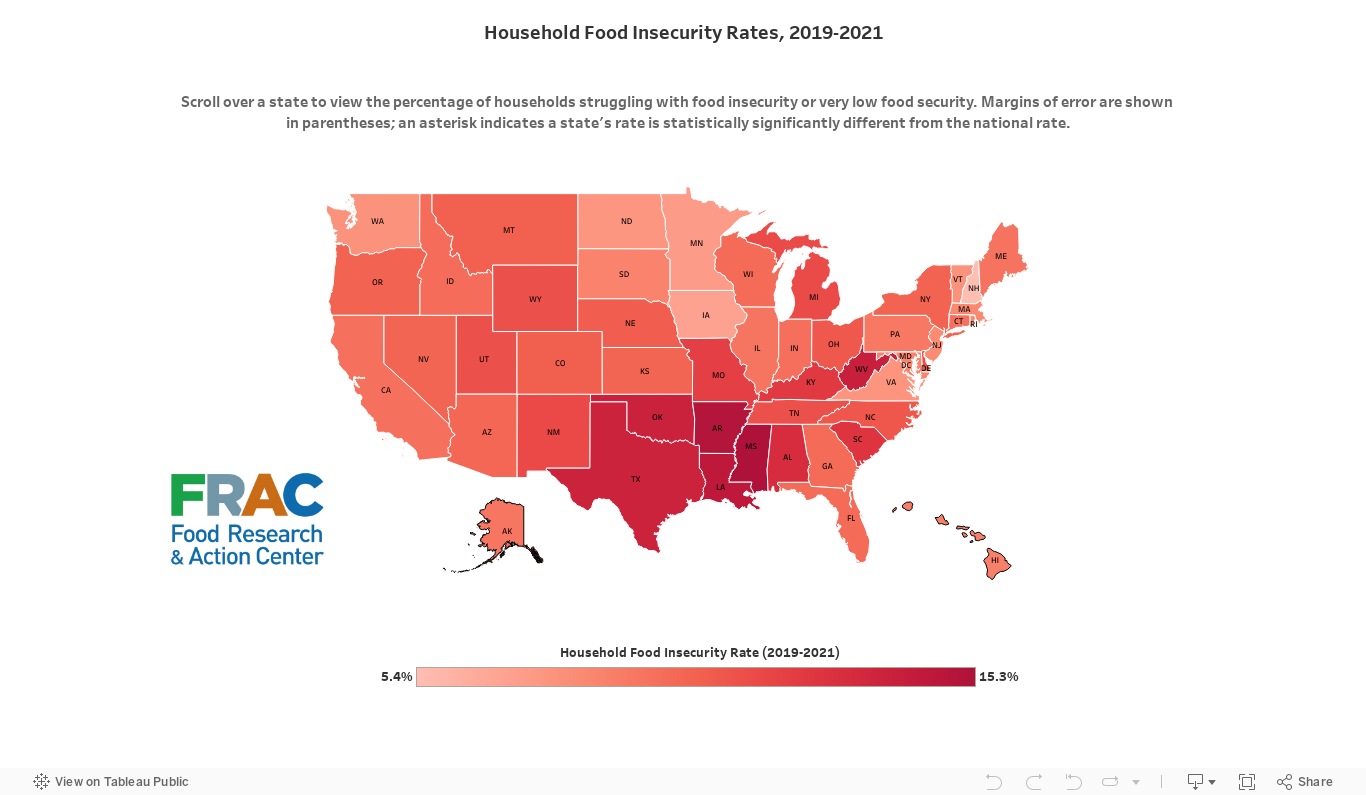
Take a look at how New York compares to other states in the US. Be aware that rates within the state can be very different by location. Broome County’s food insecurity rate is the same as that of Oklahoma (13.8%), while New York State’s is lower at 10.3%.
Food Security in Broome County
The problems of food insecurity, limited access to healthy foods, and obesity among adults and adolescents affect a significant portion of people in Broome County. The data below is taken from the 2022 Broome County Community Health Survey and the County Health Rankings and Roadmaps website (2020 data).
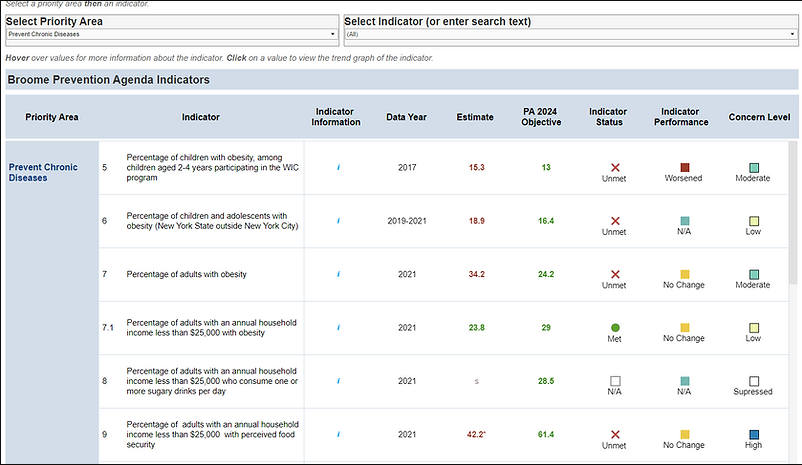
The New York State Prevention Agenda Dashboard has data on this topic.
Click on the image and navigate to the site. Select “Broome” from the “Select Counties” drop-down menu. In the “Select Priority Area” drop-down menu (pictured) you’ll find “Prevent Chronic Diseases.” Click on an indicator and you can compare different counties.
Here is a bit more data that shows why food security is a priority issue in Broome County:
| 4% | 13.8% | 37% | 71% |
of people in Broome County have limited access to healthy food. 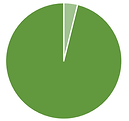 |
of people experience food insecurity.
|
of adults (18 and older) are obese.
|
of surveyed residents are concerned about adult overweight/obesity
|
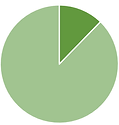
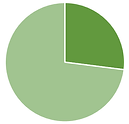

Food Insecurity among overall (all ages) population in Broome County (2020)
Want more data? Check out these data focused dashboards:
NYS Community Health Indicator Reports

Our Plan: Food Security
To address food insecurity, we plan to:
BCHD: WIC has provided a total of 16,870 reduced-fat WIC food packages as of June 2022.
Improvement: The % of children (2-4 years) participating in the WIC program with obesity has decreased from 15.3 to 8.7
Worsened: The percentage of adults ages 18 years and older with obesity, increased from 25.7% to 30.7%.
FEN: 32 providers enrolled in CACFP
Throughout 2020-2021, B-T BOCES schools purchased $1.5 million (149,405 pounds) in NY products served during lunch.
OFA: The senior centers re-opened in June 2021 and had 6562 participants in their HP classes. As of October 2022 there have been 5,849 participants YTD.
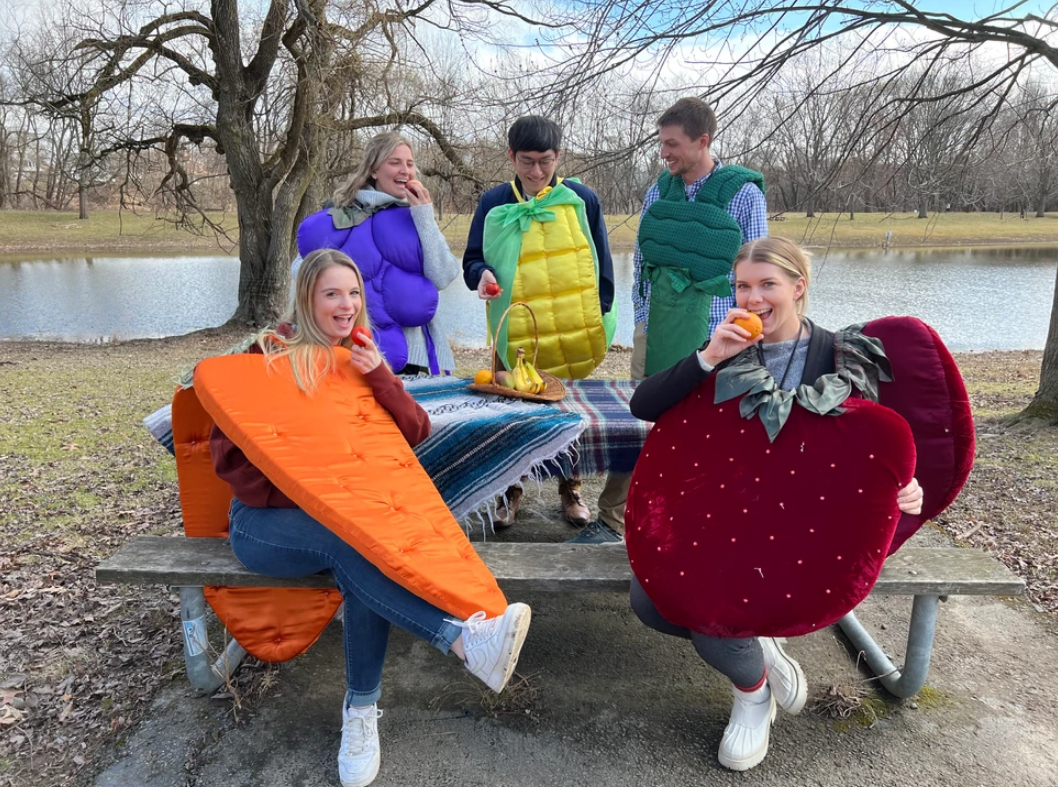
RHN: 15 taste tests scheduled for the 2022-2023 school year. 2,130 students participated in taste tests held in 2021-2022.
CCE: 4298 youth reached through SNAP-Ed program
Lourdes: As of 2022 for all active patients, on average, patients experience a weight loss of 13%. BMI reductions also respond accordingly. There are currently 550 active participants and 100 that are categorized as “maintenance.”
RHN: 89 people in Endicott in Prx program, 32 in JC.
CCE: 409 participants in chop n chat program in 2022.
OFA: coupons for farmers market distributed to 860 seniors in 2022. In 2022, OFA served a total of 46,663 meals within 8 senior centers. As of September 2022, Meals on wheels served 139,635 elders.
CCE: 15 vendors at the farmers market accept SNAP/EBT, Veterans Coupons, WIC FMNP, Fresh Connects, Produce RX, and Senior FMNP.
WIC- In 2022, 80 WIC eligible households were referred by a healthcare provider site/22 WIC eligible households were referred by hospitals.
UHS: 20 VINES spots for patients
CCE: Around 50 individuals use SNAP/EBT at the market each month (~350 transactions since January 2023 totaling $6,956.00), we had $3,698 in Fresh Connect Sales, $1,536 in ProduceRx sales, $339 in Veteran Coupons, $126 in Kids POP Club Coupons, FMNP coupons are not for redemption until July through November (2022 totals for FMNP redemption totaled $23,000). In addition, our farmers have donated 2,231 pounds of food to Binghamton Food Rescue since January 2023.
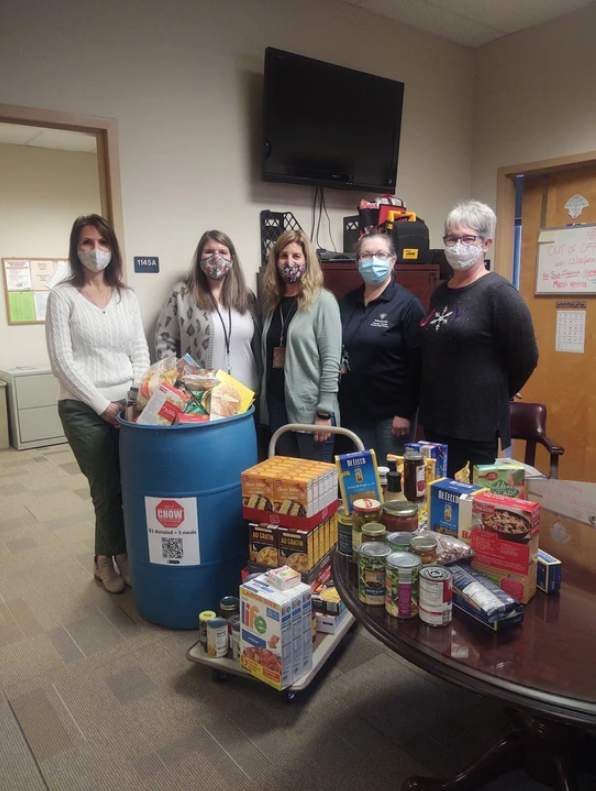
CHOW: Improvement: In 2021, Broome CHOW rescued 1.8 million pounds of food for the community. In 2022, 2.5 million pounds.
CHSC: ACBC food pantry serves between 350-400 individuals per month, approximately 4500 individuals per year.
Catholic Charities: In 2022, Mother Teresa’s Cupboard served a total of 6,626 people, 100 Main St. Binghamton served a total of 23,259.
St Cyril: As of 2022, served a total of 56,429 residents in Broome County averaging around 61,000 lbs. of food per month.
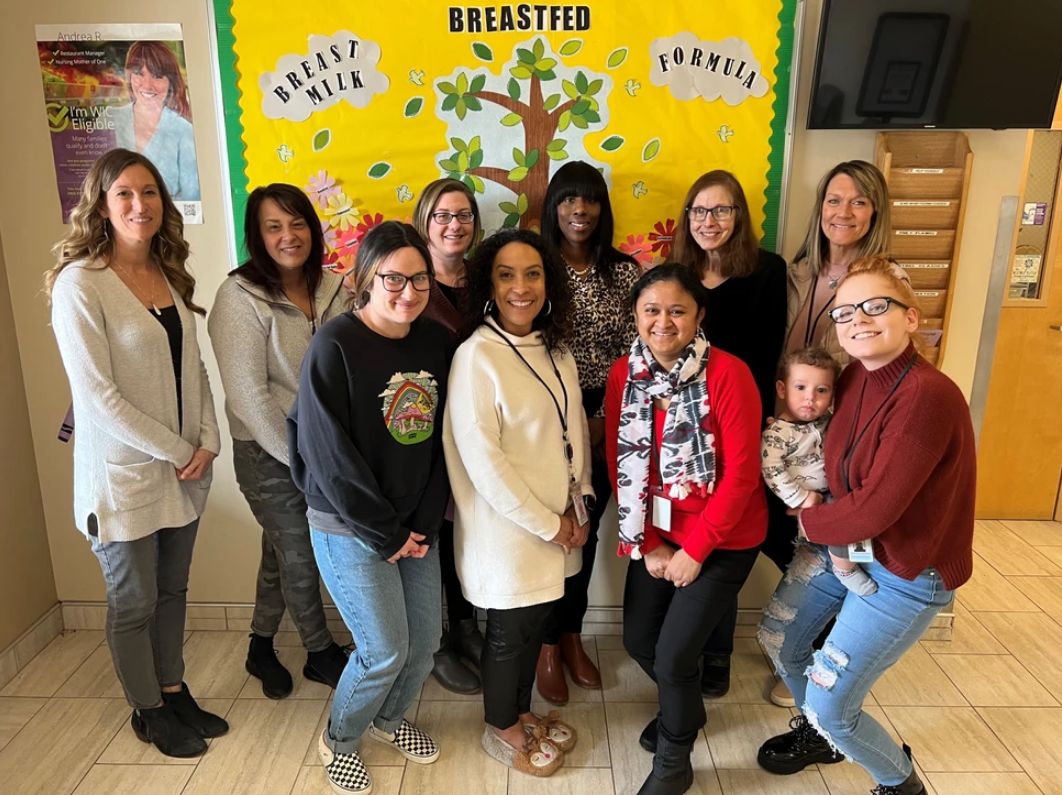
UHS: (2022 as of 11/09) # of deliveries (1,320) # of moms who exclusively breastfeed (1,024), # of moms who combo breast feed and formula feed, # of moms who exclusively formula feed (262). Deliveries from 7/1/2023 – 6/29/2023 = # of deliveries (1,622) # of moms who exclusively breastfeed (698, 43.03%), # of moms who combo breast feed and formula feed (458, 28.24%), # of moms who exclusively formula feed (449, 27.68%), and # of moms who have an “other” feeding documented (17, 1.05%).
Lourdes: 11/09/22, 644 deliveries with 564 breasted and 77 formula fed.
WIC: virtual infant feeding classes (36 families have attended the virtual infant feeding class YTD)
RHN: RHN provides 365 PRX slots in Broome County. Participants have been maxed out at 52 for the Lourdes program, with a waiting list.
The Food Bank of the ST contributes food and other items to 45 food pantries in Broome County. With 12 of the locations offering deliveries, 15 locations offering diapers, and 4 locations offering drive-thru services. Food Bank of the ST (2022 YTD) has had 51,682 household requests for food, 366,492 requests for food, 2,663,708 total pounds of delivered, 2,554,957 which were food.
HLC CCE: 978 individuals ages 6+ reached from 2021-2022 at community center based activities. 304 youth and 20 adults since January 2023.
Catholic Charities: Summer lunch program, In 2022 thus far, the Endicott location served 142 lunches, 31 unduplicated, Binghamton served 1444 lunches, 434 unduplicated.
CCE Community nutrition 2022: Reached 106 youth and 90 adults. Since January 2023 – direct education to 30 Broome County Veterans, 77 youth at Deposit Summer Camp, 47 participants in food preservation classes, 8 adults in pressure canner testing, and 631 youth in incubation and embryology classes.
CCE: Through SNAP-Ed nutrition program, reached 4,298 youth and 1421 adults with series and one-time classes. Through partnership with the United Way and the Healthy Lifestyle Coalition, CCE reached 304 youth and 20 adults with nutrition programming.
With Expanded Food and Nutrition Education Program (EFNEP), graduated 43 low-income adults and 127 youth with 6+ classes.
UL/CCE nutrition and education program served 50 kids ages 5-13. Children had an extra 30 minutes of exercise a day.
Contributing Organizations
Each of these organizations is part of the plan outlined above. Representatives report on how their organization is working towards achieving county goals.



Do you or your organization want to help? Check out some other evidence-based strategies to address the food insecurity issues within the community.
Some of the work being done in our communities to combat food insecurity…
References
About Food and Nutrition Insecurity (cdc.gov)
Household Food Security in the United States in 2021
Dietary Guidelines for Americans, 2020-2025
Household Food Insecurity Rates, 2019–2021
Food Insecurity Trajectories in the US During the First Year of the COVID-19 Pandemic (cdc.gov)


